
Supporting Young Changemakers to Secure Transport Commitments from Regional Leaders
“I can't explain how important it is for a councillor to hear from residents (particularly young ones) about the need for bold climate action. It really helps with my decision making and helps strengthen support for the things we need to do." Cllr Ed Lamb
Young people are often excluded from decisions that directly affect their lives. In the Liverpool City Region, students told us they felt public transport services were designed without meaningful input from the young people who rely on them every day.
Through our Changemakers programme, students from three schools worked with Hope for the Future to identify transport challenges in their communities, gather evidence, develop policy recommendations and build the confidence to engage directly with decision-makers.
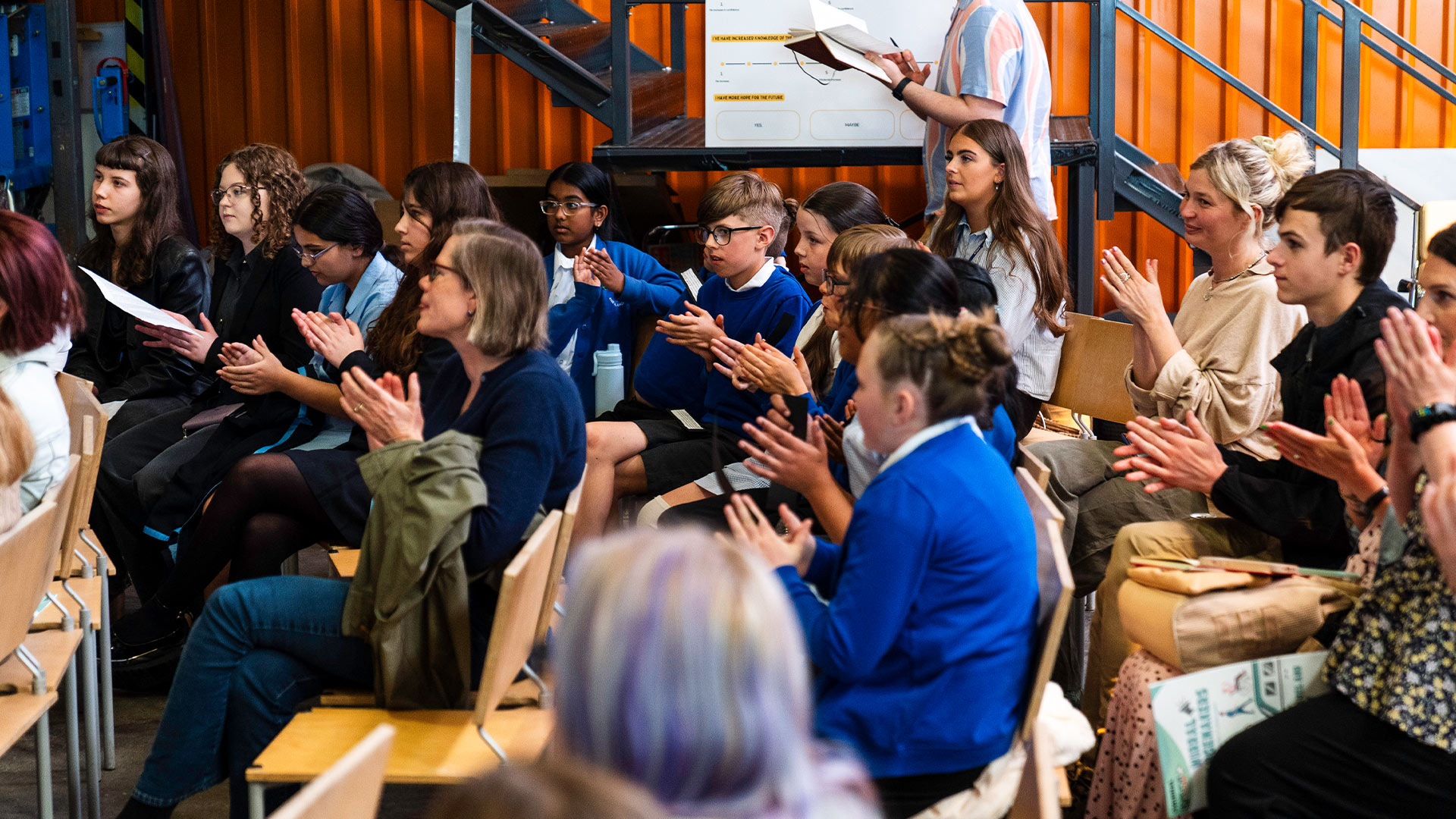
As part of the programme, we facilitated a series of political roundtable discussions between students and local decision-makers. At West Kirby Grammar School, students presented their findings to senior transport leaders including the Liverpool City Region Director of Transport, the Chair of Wirral's Transport Committee, and a senior Network Coordinator from the Combined Authority.
Drawing on evidence gathered through a school-wide survey, the students made a compelling case for change, using real-life examples and data to highlight barriers faced by young people using public transport. Their asks were clear, practical and solutions-focused.
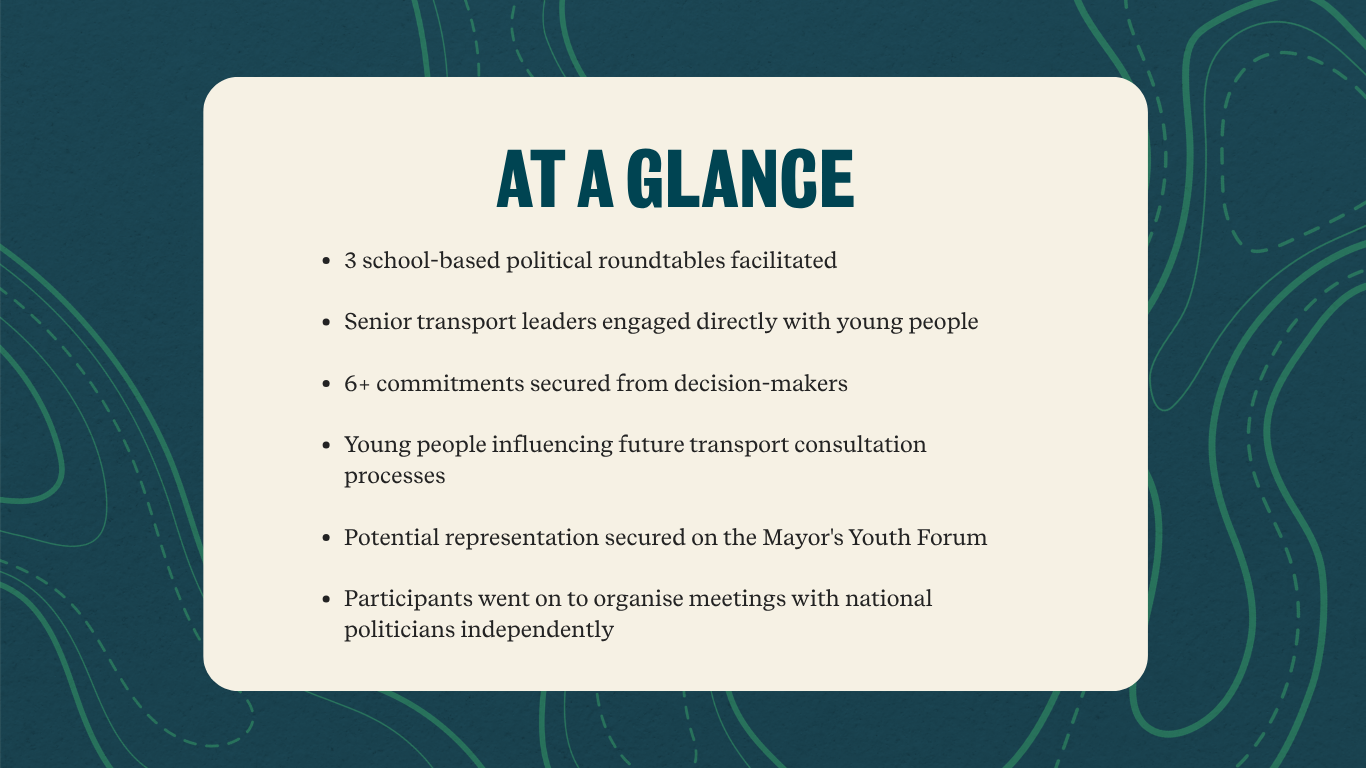
The discussions resulted in several significant commitments:
A commitment from the Liverpool City Region Director of Transport to ensure young people are meaningfully consulted on future transport decisions, recognising that young people had previously been overlooked as a key stakeholder group.
A commitment from transport leaders to improve communication about transport incentives and fare schemes by working directly with schools to reach students and families.
A commitment to review how ticketing and fare structures can better support affordability and accessibility for young people.
A proposal to explore representation from the school's Eco Club on the Mayor's Youth Forum, creating an ongoing mechanism for young people to influence regional decision-making.
The impact extended beyond the roundtable itself. Decision-makers provided detailed feedback on the students' proposals, helping them refine their recommendations ahead of presenting them at a wider regional conference.
Perhaps most importantly, the programme created lasting confidence and political engagement among participants. Several students who had previously taken part in Changemakers returned to lead further advocacy activities, including organising a meeting with their local MP and DEFRA Minister, Angela Eagle, to continue pressing for environmental action.
The programme also generated wider benefits within schools. Teachers reported increased student confidence, stronger engagement with environmental issues, and a greater willingness among young people to participate in civic life.
"You could see the progress those students had made. Their ability to ask questions, respond to challenges and hold their own in conversations with decision-makers was remarkable."
"The opportunity to work with Hope for the Future gave students the chance to step outside the classroom, engage with people in positions of influence and realise that what they have to say has value."
For local authority partners, the programme demonstrated a practical model for embedding youth voice into decision-making. As one council officer reflected:
"There aren't many organisations that operate like this. While I didn't know what was happening every step of the way, I had complete confidence in the team and was able to relax through the process."
By creating direct pathways between young people and decision-makers, the programme moved beyond education and into influence, ensuring that young people's voices were not only heard, but acted upon